5 ‘Scorch Trials’ Hints At Heartbreak…

WARNING: Contains MAJOR spoilers for The Scorch Trials (film) and The Death Cure (book) – if you don’t want to find out what happens on ‘page 250’, turn back now. You have been warned!

It’s rare for me to leave a cinema as hyped up as I walked in, but Maze Runner: The Scorch Trials delivered a middle-of-the-franchise film that ticked all my boxes, and then some.

I’m a huge fan of the book series, and I had heard mixed reviews from other fans about all the changes introduced in the Scorch Trials film. Director Wes Ball had prepared fans in advance, stating that the second film contained elements of the third book, and some straight-up changes, that would all come good in the third and final – at last, a trilogy that will remain a trilogy! – film.

Clutching the obligatory ice-cream sundae, I stepped into the cinema torn between excitement and trepidation…

I loved every buggin’ second.

The two hours and eleven minutes out in the Scorch flew by, and every shucking member of the cast pulled me hook, line and sinker along with them on their respective journeys as they fought for their lives in the post-apocalyptic wasteland that had once been America.

Scorch Trials - NewtIt’s no secret to anyone who knows me that I am a huge Newt fan. And when I first saw The Maze Runner, the casting of Newt was the one thing that was set to make or break my opinion of the adaptation. If I could have cast the character, I would have chosen Thomas Brodie-Sangster to take the role, and would have settled for no-one else.

How fortunate for me that the casting team felt the same way!

Naturally, then, it was Newt I focused on in The Maze Runner and Newt I watched even more intently in The Scorch Trials. Because, as any trilogy fan will know, Thomas Brodie-Sangster (and Dylan O’Brien) will have the most challenging, gut-wrenching and shocking scene in the entire series to contend with in The Death Cure. A scene that will be all the more powerful for their off-screen friendship. A scene that sent book fans everywhere into meltdown. A scene that, according to his Twitter, disappointed James Dashner’s own daughter.

The dreaded ‘Page 250’

And from the look of The Scorch Trials, Wes Ball doesn’t plan to disappoint. Throughout the film, the hints at what’s coming are numerous – some obvious, some less so – and it leaves me feeling wholly confident in the third film.

Surprisingly, though, some of my friends hadn’t noticed some of the more subtle foreshadowing, so here, for them, are my five hints at heartbreak…

Number 1: The most obvious – Crank Newt.
During his drink-induced hallucinations, Thomas sees the late Winston, infected with the Flare, before turning to find himself faced with a Flare-ridden Newt. The scream that leaves our hero is quite something. And the sight of Newt infected so badly was not one I was expecting in The Scorch Trials.

Although I must admit, seeing fans freaking out because they thought his death had been brought forward…that was quite something!

Number 2: Giving Winston the Gun.
When Winston begs to be left behind and allowed to kill himself, Newt is the one to hand him the gun. He doesn’t even question it. This is doubly poignant for book fans, who know how Newt got his limp: Newt himself once tried to commit suicide, in the Maze, and was dragged to safety by Alby. To see him acting as an agent in someone else’s suicide made me shiver.

But it also gave a nod to Newt’s own eventual fate. Winston only relied on Newt to hand him the gun. Newt will rely on Thomas to fire it.

Number 3: “Apparently not all of us…”
Teresa’s line may seem innocent enough, a plot device to explain that not all of them are Immune. But why was that line given to her, and not to someone else? Surely they must all have come to the same conclusion with the infection of Winston?

And even if they hadn’t, she surely could have said simply: “Apparently not.”

The addition of “All of us” and the later revelation that she has, in fact, had her memory restored, make me think that perhaps she has remembered more than we are ever told. Maybe she knows exactly who’s Immune…and who isn’t.

Either way, when Newt inevitably succumbs to the Flare, the explanation has been given already. The perfect set-up to the perfect death scene.

Number 4: “Thanks, Tommy…”
In the books, Newt calls Thomas by the nickname ‘Tommy’ almost from day one. In the films, the lack of that nickname in the first film had fans up in arms – and perhaps that’s why, in the second installment, it has been slipped in as often as possible, most noticeably when Thomas saves Newt from the Cranks and then, later, when they are talking about their lost friends from the Maze.

But something tells me it’s not just been included for the fans. It’s been included as a set-up to the third film.
Three words: “Please, Tommy. Please.”

Number 5: “It will buy her some time.”
“Is it a cure?” Thomas asks of Mary, as she injects a blue liquid – an enzyme extracted from the brain of an Immune – into Brenda.
“Not exactly,” replies Mary.

She goes on to explain that it doesn’t cure the virus, just slows the spread of it, buys the victim some time.

Cast your mind back to the beginning of the film…when Minho was on the treadmill, Thomas was having a blood test and Newt was being injected with a ‘cocktail’ of vitamins and minerals, everything he’d been deprived of in the Maze.

Now think back to the colour of that liquid. In a tray filled with tubes of rust-coloured liquid, there was one tube that stood out. The one from which the doctor took the liquid for Newt’s injection.

It was blue.

I think I’ll leave it there…

A Nervy Girl’s Guide to Online Dating…

In January, I broke up with my boyfriend. We’d only been together two months but, sadly, that didn’t seem to matter to him when he proceeded to behave like a first-class moron. To give you an idea, he turned up at my house late at night and refused to leave until I came outside to speak to him…

Classy.

For the second time in a year, I found myself on the receiving end of a great deal of unpleasantness following my decision to end a relationship. For the second time in a year, an ex-boyfriend shifted his attentions to someone else in a very short space of time indeed, while I was left dateless and wondering what on earth I had done to deserve my new state of social exclusion.

What gives, dudes?

Anyway, I digress. Eventually, I signed up for online dating – by ‘eventually’, I mean five months later, in May. And by ‘signed up’, I mean my mother bought me a subscription after she got tired of seeing me moping about how I was probably going to die alone without even a cat for company.

As someone who was utterly terrified by the prospect of online dating, I read loads of guides on how to do it, but none really hit the nail on the head. So I’ve made the following five observations from the real world of online dating, to help any other nervous first-timers:

  1. Don’t be afraid to write people off for silly things: “Give everyone a chance,” said my mother, “They might surprise you!” – I’m sorry, but for a fan of good spelling the use of ‘your’ instead of ‘you’re’ is simply inexcusable. As is asking the same question three times because you’ve not actually bothered to pay attention to the answer.

2. Be as picky as you like: Don’t get on board with the try-something-new philosophy. If you know what you like in a person, tailor your profile and your ‘desirable qualities in a partner’ section to be as specific as it needs to be in order to find you a promising date. Don’t spend weeks messaging someone you don’t intend to go on a date with – it’s a waste of everyone’s time.

3. Take your time: If you’re a nervous or cynical (or both) online dater, don’t rush into a date just because you feel like you should. Why trek three hours across the country to meet someone that you’re only feeling so-so about meeting. Yes, it’s difficult to tell if there’s chemistry via your computer screen but, even online, there is such a thing as ‘courting’. One guy almost had me going on a date, until I didn’t reply for two days (I was working) and he saw fit to send a needlessly curt message saying the following: “I guess you’ve found your Romeo. Or you just don’t have time for me.” Out in one strike, my friend.

4. Don’t judge a man by his pictures: Look, he’s got a picture of him on a mountain, that means he’s sporty! Look, there’s one of him wearing a silly hat, he’s got a sense of humour! Ooh, look at that six-pack! Don’t be fooled by appearances. It almost goes without saying, but I’ve fallen into the trap once already – a pretty face and some crazy pictures doesn’t mean someone is reliable or charming or funny. Get chatting and keep your mind open.

5. A date doesn’t mean a relationship: It’s taken me three months to get this into my thick skull. You don’t owe any of these people anything beyond the courtesy of a message to let them know you’re not interested following a first date. Nor do you owe a date to every person you message. The beauty of an online dating profile is that you can block people if they get out of hand, you don’t have to face numerous people in person to tell them you aren’t interested and you can shut down your profile if you find that online dating isn’t for you.

As it turns out, online dating isn’t for me. But that’s another story…

All-Singing, All-Dancing

Last week, I was asked to run a singing workshop at a summer school for a group of 22 dance students between the ages of 5 and 12. I agonised, for days, over what on earth I could teach that would hold the interest of all students, male and female, from the youngest to the oldest.

And then, thanks to my cranky old iPod, it came to me. A classic: ‘Do-Re-Mi’ from The Sound of Music.

I’d warm up with some basic vocal games and exercises and then move on to a rousing rendition of Disney’s ‘Let It Go’ to get them through the initial embarrassment of singing in front of other people, something half of them had never done before. Unsurprisingly, I didn’t need to hand out words for this one! Frozen fever is still strong with children everywhere, it seems…

And then we would turn our attention to the main event. They seemed to enjoy the workshop, but it struck me just how afraid they all were of their own voices, how nervous of messing up the song. So we added some silly actions and I made the one twelve-year-old in the room our Maria, in an effort to boost her obviously low confidence in her voice.

“I can’t sing on my own,” she said. “I can’t sing.”

“You can,” I insisted. “I’ve been listening to you for the last half an hour, you’ve got a lovely voice!”

She gave it a go, and I had to turn the backing track right down for her to be heard. On her second attempt, she was a little louder. By run-through number three she held her head up high and sang to the rest of the room.

It was amazing to watch these children, some as young as five, engaging with a classic musical theatre number and with each other, offering encouragement and help to those who struggled to remember the words or the actions.

Singing workshops are difficult – you never know what you’re going to be faced with, if they’ll like the song you’ve chosen or if they’ll throw themselves into the work or not. But I can honestly say, having run many more workshops for adults than children, what most amazed me was how, after their initial shyness, the children gave the workshop their all and tried every single thing I threw at them without fear of reproach or ridicule from their peers.

That rarely happens in the adult workshops, where you can be facing a roomful of people who have spent their whole lives believing they ‘can’t sing’ and spend the whole time battling that notion. In the twelve-year-old ‘Maria’ that process had already started.

I find it fascinating, but also sad. And I feel privileged to have been given the opportunity to work with the children I met last week – I hope they went away feeling as confident in themselves as I felt in them. What a wonderful way to spend a day!

Radio Silence

Sorry for the radio silence!

This blogging lark is harder than I thought – I have so much I want to blog about, but finding a) the time and b) the guts to write what I’m thinking and press ‘publish’ is proving to be harder than I thought.

For someone who is fairly extroverted, this came as quite a shock.

After all, I’ve never had problems making myself heard! I speak up in meetings, I’ll prance and dance about on a stage from dawn ’til dusk and at parties you’ll find me hogging the karaoke microphone or participating in a dance-off in the centre of the floor.

I was a writer for a living for two years before I fell into my current job; I’ve written enough programme bios to make me sick of the sight of my own name; I run more theatrical social media accounts than I have fingers to type.

Why, then, do I find blogging so bloody difficult?

There’s a certain amount of pressure, I suppose, when you’re writing a blog, to be witty or funny or to write a post that will go viral. To blog every day lest you lose readers, to dedicate all your time to social media lest you lose followers, to change the world, to make a difference, to make millions.

There’s the worry of being shot down, that the words you’ve spent hours choosing and ordering simply won’t be good enough for the legions of strangers reading them.

There’s the need to be liked, the need to have your voice heard, the need to put your opinion somewhere in the hope of finding like-minded souls to whom your ideas will really mean something.

For me, though, none of that matters. I mean, don’t get me wrong, it would be nice to make millions or change the world, but for now I have a much smaller, much humbler goal in mind:

Being myself.

Sounds a little silly, doesn’t it?

And perhaps it is. But I’ve spent so much time trying to work out what the ‘point’ of this blog should be that I lost sight of why I started doing it in the first place: to have a platform for myself, be it for reviews, embarrassing stage stories, questions, opinions or otherwise.

Perhaps a clearer focus will come with time, but for now I’m just happy ambling through the world of blogging while I find my feet.

Who knows? Maybe, slowly, I’ll even get to grips with the fact that I don’t always have to be the all-singing, all-dancing personality I’m best-known for to get people to listen. Or read.

So here I am, ready to blog, with a new enthusiasm and the realisation that not every post has to be a life-affirming masterpiece or a tale of comic genius.

I hope you’ll stick with me – I have a feeling it’s going to be quite a ride!

It’s A Big, Bright, Beautiful Show!

It’s hard to believe that the film adaptation of Shrek was released fourteen years ago, in 2001, to critical acclaim the world over. The unorthodox hero stormed the box office and the hearts of cinema-goers worldwide and earned himself several sequels off the back of his initial quest to rescue Princess Fiona.

Equally hard to believe is that Shrek: The Musical has been out since 2008 and, although familiar with the soundtrack, it’s taken me seven years to see it at the theatre. On Friday evening, at The Mayflower in Southampton, I rectified that.

With most of the dialogue lifted straight from the film – after all, if it ain’t broke, don’t fix it! – and a songbook of original numbers to complement the action, it’s no wonder that this show is still filling houses. It’s a laugh-a-minute romp through the swamp!

The scenery is astounding, the Dragon is stunning, the stage is awash with colour from beginning to end and no detail is too small. It was the perfect setting for the tale, and those doing the telling did not disappoint.

The backbone of the show is the relationship between Shrek, played by Dean Chisnall, and Donkey, played by Idriss Kargbo. Both were on top form, their dynamic flawless, setting the bar high for the rest of the cast.

Luckily, their fellow performers were more than up to the challenge! Shrek is a true ensemble piece – only four cast members don’t play multiple roles – and each and every one of them was thoroughly invested in immersing the audience in the story.

Particular mention must go to Candace Furbert’s roof-raising performance as the Dragon, Keith Henderson’s energy as Peter Pan and Will Haswell’s excellent nose-control as Pinocchio.

What really struck me about this show was that it was like stepping into the film – each and every voice and accent was so close to the original; it added an extra dash of magic to an already enchanting show.

Often enough, new musicals will try to introduce songs that are, quite frankly, impossible to remember, filled with discords and odd intervals for the sake of trying to give the audience something ‘new’. Catchy modern show-tunes are getting harder to find these days, but Shrek: The Musical has them in abundance.

‘I Think I Got You Beat’, ‘Freak Flag’ and ‘Big, Bright, Beautiful World’ were just a few of the numbers people were humming as they left the theatre. But it was ‘If Words Fail’ that was the unlikely show-stopper of a number – not in the traditional bright-lights, big-notes and jazz-hands sense, but in a softer, subtler way, a song that resonates with any poor soul whose ever had those crippling nerves that come with a first confession of their feelings.

Each song is stuffed to the brim with comedy, too, even when you’re not expecting it. Even Princess Fiona’s introductory number, ‘I Know It’s Today’, takes a comic turn when an impatient Adult Fiona – played beautifully in the first half by Bronté Barbé – arrives on the scene.  One of my favourite songs in the show, it’s an anthem for little girls the world over who are growing up on fairytales and wishing for their own happily-ever-after.

The biggest bursts of comedy, though, came from Gerard Carey as Lord Farquaad – with impeccable comic timing and a serious vocal talent, Gerard had the audience in fits of laughter with every appearance, whether he was defying gravity or simply walking from one side of the stage to the other. Doing an entire production on your knees is one thing, but to swing across monkey bars, leap over dancers and get down on one knee is beyond impressive; just when you thought he’d exhausted his repertoire of possible moves, he’d pull another out of the bag. Comedy gold.

But perhaps the real star of Friday night’s performance was Nikki Bentley, who stepped in halfway through the performance to take over from Bronté who, due to illness, couldn’t finish the show. The new Princess Fiona opened the second half with ‘Morning Person’, a catchy ditty that delivers as many laughs as it does tap-dancing rats! Her cheeky Fiona flounced, flourished and farted her way through the second half to her happy ending with the audience firmly on side. And with a voice like hers, Nikki is absolutely one to watch out for in future productions – she certainly gained a legion of new fans on Friday!

Shrek: The Musical expertly walks the line between humorous and heartfelt. Although it never stays serious for long, the brief moments in which it tugs at your heartstrings – Shrek and Donkey’s falling-out, Fiona’s leaving for Duloc, Shrek’s final proposal – are so beautifully scripted and delivered that you’ll find yourself welling up every time.

It’s a tale of true love, but not as we know it, and everything that made the film so successful is in the musical, along with a host of extras (look out for the numerous nods to other musicals) that is bound to keep your toes tapping all the way home.

“You’ve never read a book like this, but fairytales should really be updated,” sings Shrek, as he stands to be humiliated in front of Lord Farquaad, Princess Fiona and, indeed, the audience, by now fully immersed in his tale. And he’s quite right. But I suppose you have to kiss a few princes before you find your ogre.

Shrek: The Musical is on tour until February 2016 – check out the website for dates and venues, and make sure you see it if you get a chance!

Understudies: The Show Must Go On

Last night, I attended ‘Shrek: The Musical’ at The Mayflower Theatre in Southampton. I was happily tapping my toes and scoffing ice cream when an announcement came over the PA system:

“Ladies and gentlemen, we apologise for the delay in starting Act II. Due to illness, the role of Princess Fiona will be played by Nikki Bentley for the rest of the show.”

Well, I’ve been to a fair few shows in my time and can honestly say that this was the first time I’d known an understudy have to take over a role halfway through a performance.

And it got me thinking…

Understudies – and I’ve been one myself, though not on that scale – have a lot of pressure on their shoulders. It doesn’t feel that way at the time, when you’re caught up in performing and feeling the buzz of learning a principal part, knowing that you’re the ‘go-to’ guy or gal if something goes awry; but when the announcement is made and you hear the murmurs of anticipation or the disappointed groans, it can really set your nerves on edge.

It’s hard enough at the start of a show, when people are expecting to see one performer and you step out as an understudy wondering how many of the audience will be taking to social media later to lament the fact they got the understudy rather than the publicised lead.

To step into the leading lady’s shoes halfway through a performance, though, that’s quite the task. To open with comic gem ‘Morning Person’ is an even bigger ask. With little time to prepare and an audience waiting to see what curtain up would bring, Nikki Bentley flounced her way out of the swamp and straight into the audience’s hearts. She was a perfect princess.

I know only too well that this is ‘part of the job’ – if you’re an understudy, you have to be ready for the call at any time, that’s why you’re there. But even so, normally you get a little more warning!

Often, too, the shift of one performer to the leading role results in a quick switch-around in other roles, too. After all, before her unexpected upgrade from biscuit to princess, Nikki was playing Gingy and the Sugar Plum Fairy and someone had to step in to fill her shoes – to my shame, I don’t know who it was, but they were excellent.

It just goes to show how versatile you have to be to cut the mustard in live theatre, often learning multiple roles and choreography. As proved last night, anything can happen at any time and you have to react in the fastest and most appropriate way possible to keep the show running smoothly.

“The show must go on,” as all the greats will tell you.

This show certainly did.

My review of ‘Shrek: The Musical’ will be going live tomorrow, so keep your eyes peeled!

Colour My World

A friend of mine posted a picture on Facebook last week of her patio. On the table was a glass of wine, a plate of food and a colouring book. Not just any colouring book, either: The One and Only Adult Colouring Book.

I was curious but I left well alone: I’m a fully-grown and (almost) fully-functioning adult, I wasn’t about to start spending my precious free time colouring in!

But three days later, beyond stressed, decaffeinated and traipsing around Southampton, I ducked into Waterstones for a breather and there it was: The One and Only Adult Colouring Book, in pride of place on a display table in the centre of the shop, surrounded by colouring pencils, crayons and felt tip pens.

imageI must have stood there for almost half an hour, agonising over whether or not I could justify buying myself a colouring book, trying to remember whether or not I still possessed any colouring pencils with which to enjoy it.

Tearing myself away with the same argument as before, I continued on my way empty-handed.

By lunchtime the following day I had a book on order and had sharpened as many colouring pencils as I could find in my catastrophe of a desk.

When the book arrived, I thumbed through it with a residual sense of guilt: I’m a busy woman, with a fairly high-pressure job, a lot of deadlines and far too many lines to learn in what spare time I can snatch, why on earth had I spent my hard-earned cash on a pursuit I abandoned in middle school?

With my limited artistic capabilities, I settled on a fairly simple picture of a flower as my first engagement with this so-called ‘relaxation technique’ and selected a bright yellow pencil to kick things off.

Two hours later and I was still going, determined to finish my picture. I think I was sort of missing the point: I was getting agitated when I went outside of the lines and spent far too much time trying to choose the right colours and make it as close to perfect as possible.

imageEven so, I wasn’t thinking about the stresses of the day, about impending events or personal dramas. I was thinking about colours and which ones would look best next to each other, which picture I should colour next, which green would best set off that blue…

As a child, I was a perfectionist. As an adult, I am, if possible, even harder on myself about success and failure – anything less than perfect isn’t good enough and I have a habit of pushing myself almost to burnout on a worryingly regular basis. Or so my friends tell me. As far as I’m concerned, it’s perfectly normal behaviour!

The beauty of colouring in, of course, is that the colours are hard to erase once they’re down on paper – there’s no sitting in front of a computer screen for hours, adjusting this proposal and that proposal until you’re happy with it. You just have to give it a go and hope you’ve made the right choice; just pick a colour, go for it and damn the uncoordinated consequences!

And thus, there is one more colouring-in convert in the world, shading away her worries in a rainbow of colour. Mission accomplished, colouring book. Mission accomplished.

So Little Time

Striding through London, heading for the Playhouse Theatre, I came across Big Ben. A giant, golden clock in the centre of London, framed by the London Eye and the Houses of Parliament, you can hardly miss it.

And yet one man, one of tens of thousands of suited and booted businesspeople power-walking around our nation’s capital every single day, managed to overlook the clock entirely. Standing at a crossing, he slipped his hand into his pocket, pulled out his phone and checked the time before dropping the gadget back into his pocket.

Flabbergasted isn’t a word I use very often, but it just about sums up my face as it looked in that moment. He checked the time. On his phone. In the shadow of Big Ben. And he wasn’t the only one.

A need for speed, perhaps? But surely, with speed in mind, it takes less time to tilt your head up and look at an actual, physical clock, than it does to go to the effort of finding your phone. Is the sight of that mammoth clock so everyday to the city-slickers of London town that it just doesn’t feature on their radars anymore?

It’s a sad testament to the hustle and bustle of modern life that we assume technology will automatically provide us with the speediest results, the most efficient of solutions and the best preservation of our precious memories…

I know I’m guilty of it at times. Mostly at events, where I have been known – not often, I might add – to stand with my phone held aloft, focusing on taking pictures as souvenirs rather than on making memories from the spectacle on stage, the atmosphere of the crowd and the company of friends.

Sometimes a memory is enhanced by not having 1001 photographs capturing every moment that you missed in person.

It’s a lesson often learned the hard way: all it takes is for one tiny blip and you’ve lost every single picture, only to then find that you can’t remember a thing about the evening for yourself…because you were too busy making sure your camera was on the right settings for the light, or focusing correctly. Not a single memory of sight or sound or smell or touch, and no-one to blame but yourself.

When did we become so reliant on our cameras, our iPads, our fancy phones, I wonder?

Take a moment to stop and notice your surroundings. Take in the details with your own eyes rather than the megapixels of your iPhone, and remember those vibrant colours. Take a deep breath and let yourself hear more than the snap of a camera phone.

Life moves so fast these days. Everyone wants to find the fastest, most efficient way of performing even the most everyday tasks; like telling the time, for example. Modern technology is a wonderful thing, and I certainly couldn’t be without it, but reliable it ain’t. That moment when your phone inexplicably crashes or freezes? It’s happened more times than I care to recall over the last twelve months.

How many times has Big Ben broken in that time, I wonder?

What’s in a name?

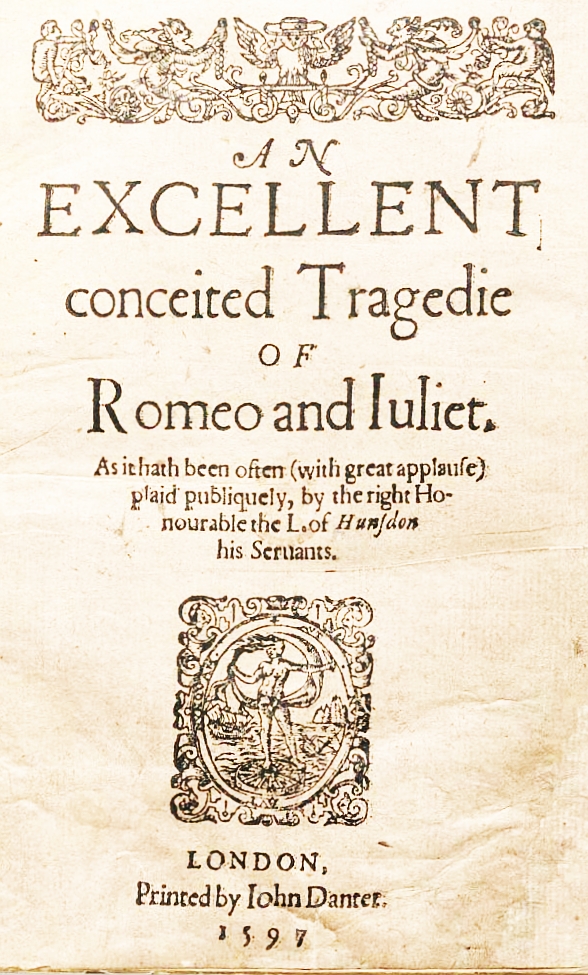
This morning, I visited a local primary school – along with a fellow performer – to run a workshop on William Shakespeare’s Romeo & Juliet, one of the most done-to-death tragedies in the theatrical world.

We had been called in as representatives of a Shakespeare company to watch excerpts from the pupils’ abridged production of the play, to give feedback, to perform an excerpt ourselves and to run a few workshop games.

Romeoandjuliet1597We were under no illusions: if these children had suffered the endless analysis of metaphors, the constant drilling down to what Shakespeare might have ‘meant’ by every single line, then we were walking into a battle already lost.

Thank goodness, then, that their inspirational teacher – who I shall, for the purpose of this blog, reference only as ‘Mr C’ – whose job it was to teach these children about the bard had hit the mark with his performance-over-reading approach, and showed such belief in the talents of his class that each one’s voice rang out clear and confident as they delivered some of Shakespeare’s most challenging scenes of love, loss and sacrifice.

In a round of character hot-seating, in which the children asked my colleague and I questions and we had to answer as Romeo and Juliet, some of the questions were so deep, so unexpected, that we were almost caught off-guard.

“Describe Romeo in three words,” one said.

“How did you feel when you found out that Romeo had killed Tybalt?” asked another.

And from a third: “Don’t you think it’s weird that if Balthazar had got the message to Romeo on time, the ending could have been different? Do you blame him?”

Wow.

These young minds of just 9 and 10 years old were delving deep into the story, asking ‘why?’ and ‘how?’ and ‘what if?’ of the bard’s beloved play, rather than fixating on the technicalities of its language and structure.

This was a class that had been taught well. Shakespeare, as Mr C so rightly said, is for watching and performing, not reading and analysing.

Sit a 9-year-old in a classroom and tell them to read a play and tell you what it means and what will they learn apart from how to resent both the man responsible for writing it and the teacher responsible for inflicting it upon them?

Sit a 9-year-old in a theatre, or stand them on a stage, and tell them to watch, to speak, to feel, and they will learn confidence, they will ask questions and their faces will light up at the name of ‘Shakespeare’.

What’s in a name? That which we call a rose
By any other name would smell as sweet. 

Juliet herself summed it up, really, when she gazed from her balcony into the night, lamenting the impact of a name on public or personal opinion. Romeo was a Montague, but she saw past that to the sweet, gentle soul of the man with whom she was to fall so desperately in love.

And so, in that vein, we must encourage the next generation to see past those who would have them believe that ‘Shakespeare’ is a synonym for ‘boring’, ‘complicated’ or ‘outdated’, and instead see his plays for what they are: pieces of theatre to be performed, felt and – above all else – loved.

What’s in a name?

Well, it’s all about how you say it.

Before coffee…

After struggling long and hard to think of a suitable name for my blog, a brief temper tantrum following the spillage of my precious coffee all over the kitchen floor resulted in the creation of this: Approach With Caffeine.

Aptly named, too, because of my not-so-secret addiction to Starbucks, formed in my first year of university. I had come from a Starbucks-free part of the world – unbelievable, I know! – and one considerate friend decided to buy me a bucket of mocha on day one, just before our very first seminar.

It was the first time in my entire education that I was sent out of a room to calm down.

And thus was a Starbucks fangirl born. And, seven years after I first considered writing it, this blog.

I hope you enjoy it.

– Rose