
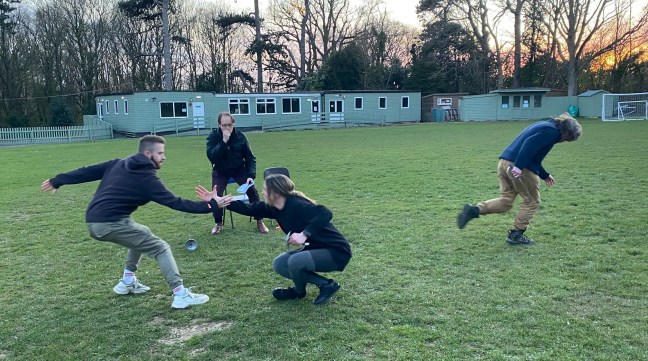
What better way to spend an evening than sword-fighting, goblet-wrestling and being smacked about with a chair in front of an entire Royal Court, I hear you cry?
Alright, so nobody is likely to be posing that question outside of ‘Hamlet’ rehearsals…
Fight calls for a stage production are great fun, but there are so many elements to consider, so with that in mind I thought it might be worth spending a couple of posts talking about the process behind the choreography of the fight and its subsequent rehearsal process.
After all, the fight that takes place in Act V Scene II of ‘Hamlet’ is really quite important!
First and foremost, a little background on Hamlet and Laertes, or rather the actors playing them. Hamlet, as you’ll have gathered if you read my ‘Finding Hamlet’ post, is played by me. Laertes, meanwhile, is played by my very dear friend Patrick Barry – affectionately known as Patch.
The (I think unrealised at the time of casting!) cherry on the cake of this pairing is that Patch is actually the one who trained me in stage combat, ten long years ago now, but whilst he trained me and has choreographed and supervised several fights that I have been a participant in since then, he and I have not actually come face to face as combatants in about 7 years!
Without spoiling anything major – not necessarily in terms of plot points, as frankly if you think ‘Hamlet’ has a happy ending then I would have to ask which rock you’ve been living under, but in terms of not spoiling all the little ‘extras’ – our rehearsals thus far have looked as follows.
Rehearsal 1: A slot at the end of a script rehearsal, with us working out simply the ‘finishing blow’ for each bout of the fight, with the nod of approval to each one from Si, our director. Si then places complete trust in us to ‘fill in the rest’, now we have his overall vision in mind.
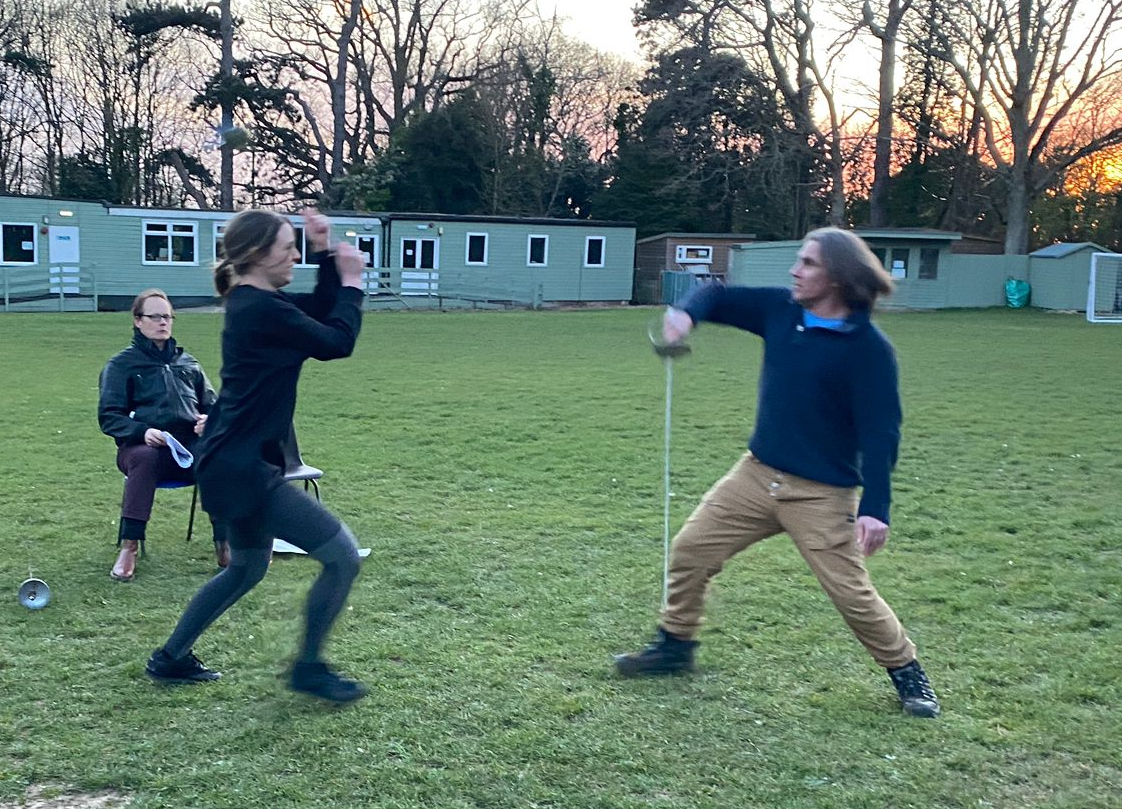
Rehearsal 2: Just Patch and I, in a hall, doing two and a half intensive hours of fight training. We choreograph each section, minus the big scuffle at the end as at the time there was talk of involving more people and ducking around the courtiers. We spend ages working on each move, making sure every one of them has a reason or a story, making sure the way we execute them and react to them is as Hamlet and Laertes rather than Emily and Patch. We’re finding their styles, finding their voices, and it’s exciting.
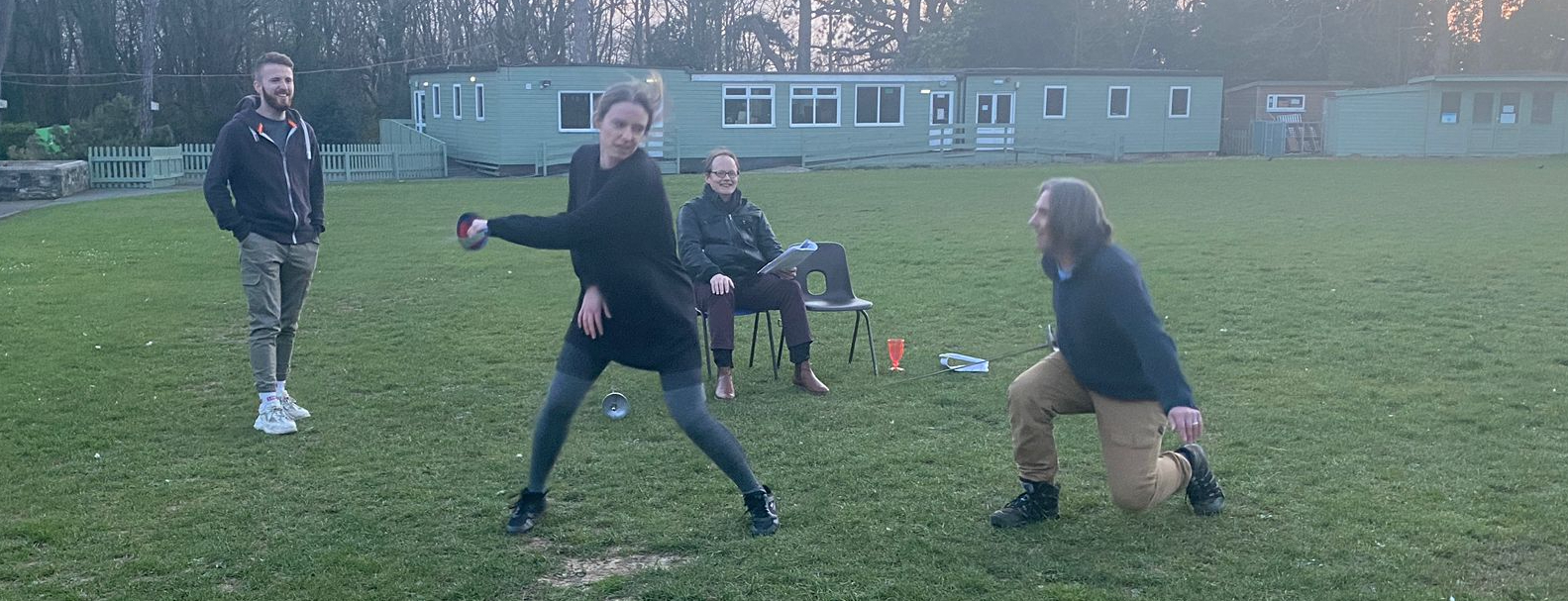
Rehearsal 3: A ‘final scene call’ for the whole cast…except, for one reason or another, we only have Claudius, Horatio, Laertes, Hamlet and Fortinbras. Here’s the thing about a fight like this – it needs practice. It has to look natural, raw, realistic. It has to become second nature. And it also has to be safe, not just for the fighters but for those around them. So if you want to involve others, even in something so simple as a chase, for the sake of safety they have to be there when it’s choreographed, to be spaced, and to learn how to recognise when a move has gone right and when it is going wrong so that they can, if needed, get out of the way. Out of the window, promptly, goes the idea of including others in the fight (with the exception of Horatio and Claudius, of course), but ultimately whilst at the time we were frustrated at the shift in vision, it turned out to be a blessing in disguise…
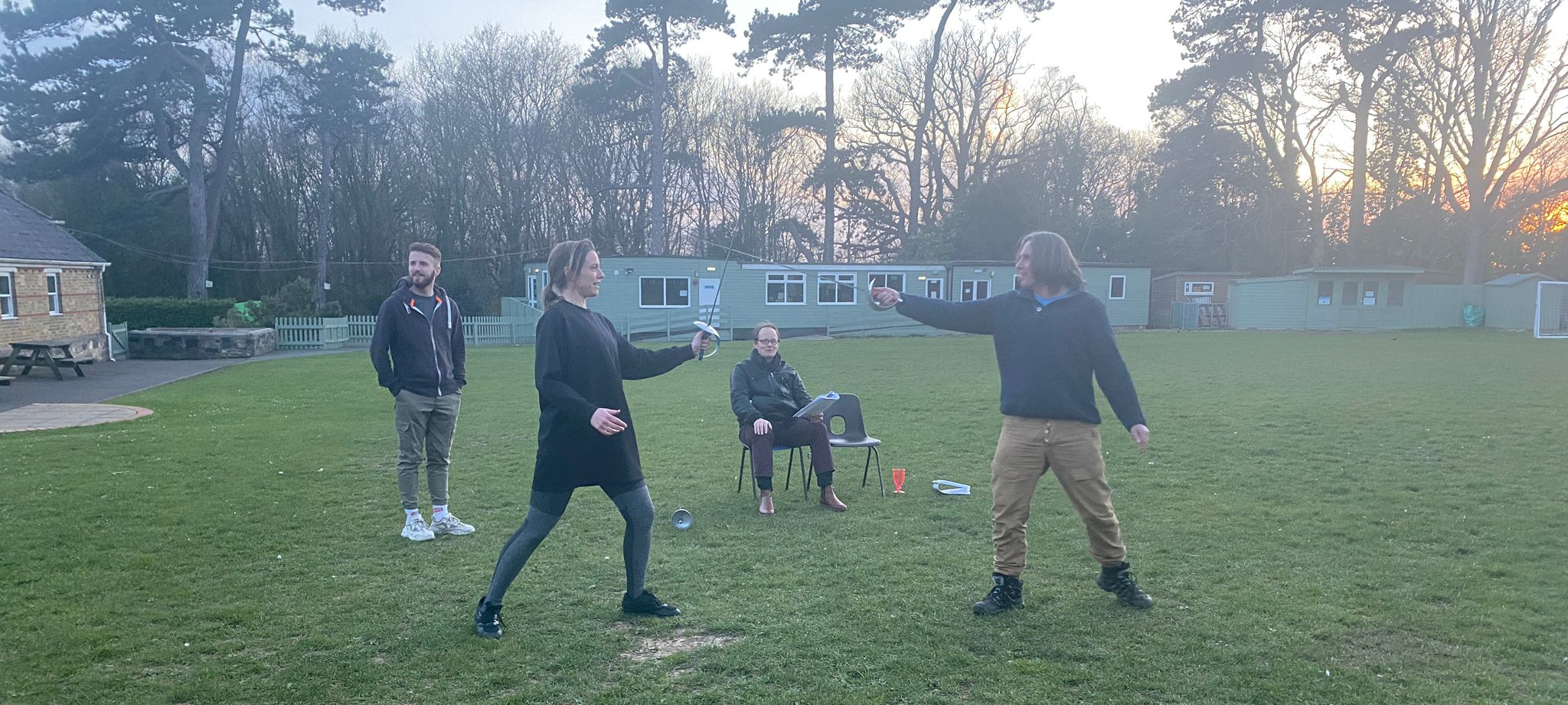
Rehearsal 4: …Because rehearsal four was electric. Utterly electric. Patch and I returned with renewed vigor and a clearer picture of how the final ‘scuffle’ needed to play out. We arrived at rehearsal early and, alongside Si, worked out exactly what we all wanted, and merged our ideas together. On the arrival of Horatio and Claudius we incorporated their respective sections, and now we have a fully fledged fight scene that just needs to be repeated, time and again, to sharpen and polish it.
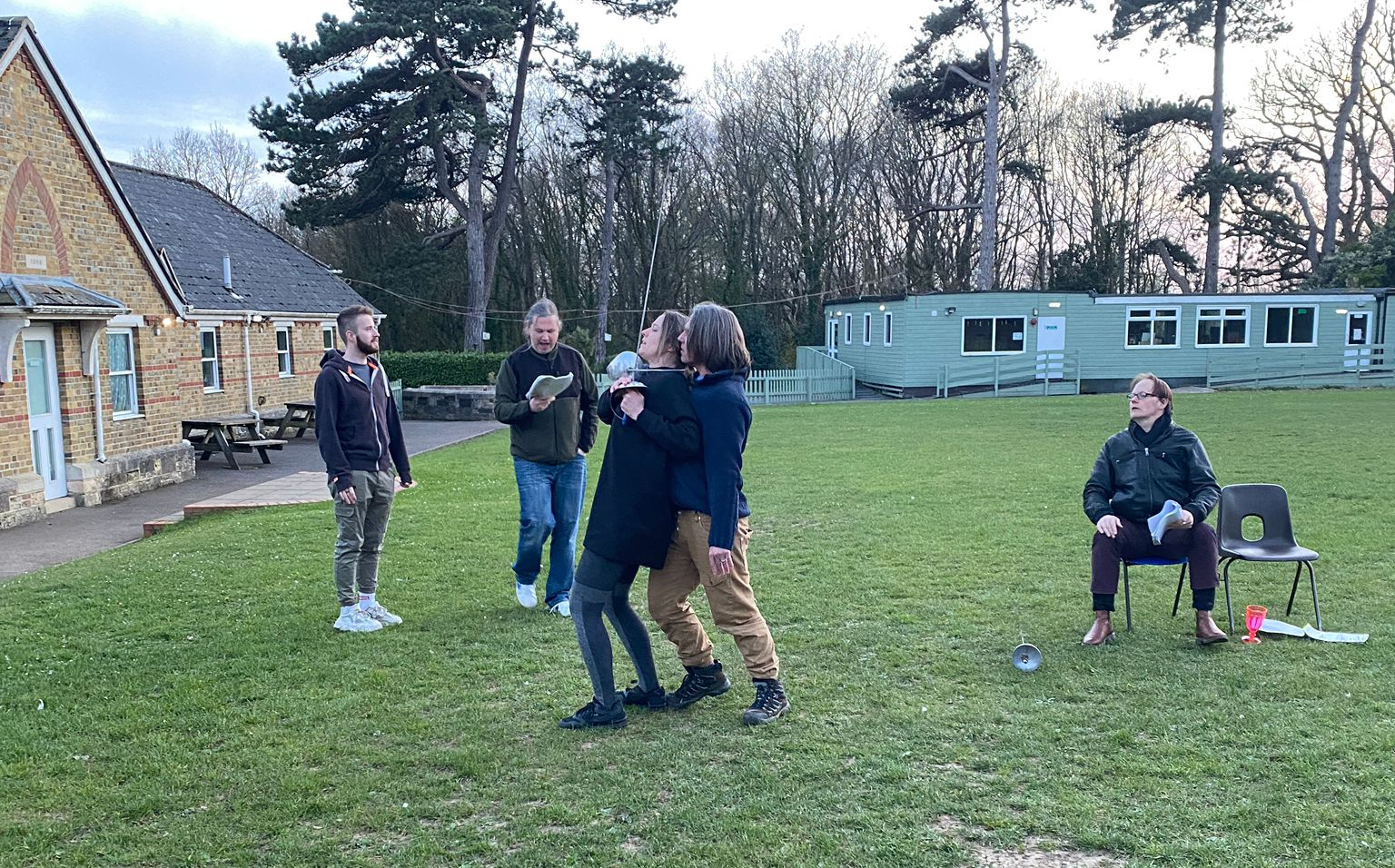
Rehearsal 5: Just Patch and I, for a quick meeting to commit the choreography to paper for reference. During this rehearsal, we also realised we were repeatedly getting stuck on one of the moves, and it became apparent that the reason was that it made no sense for either character, but in particular Laertes, for it to play out the way we had it. So we made one tiny tweak, as simple as adjusting the type of parry used, and the whole sequence fell into place.
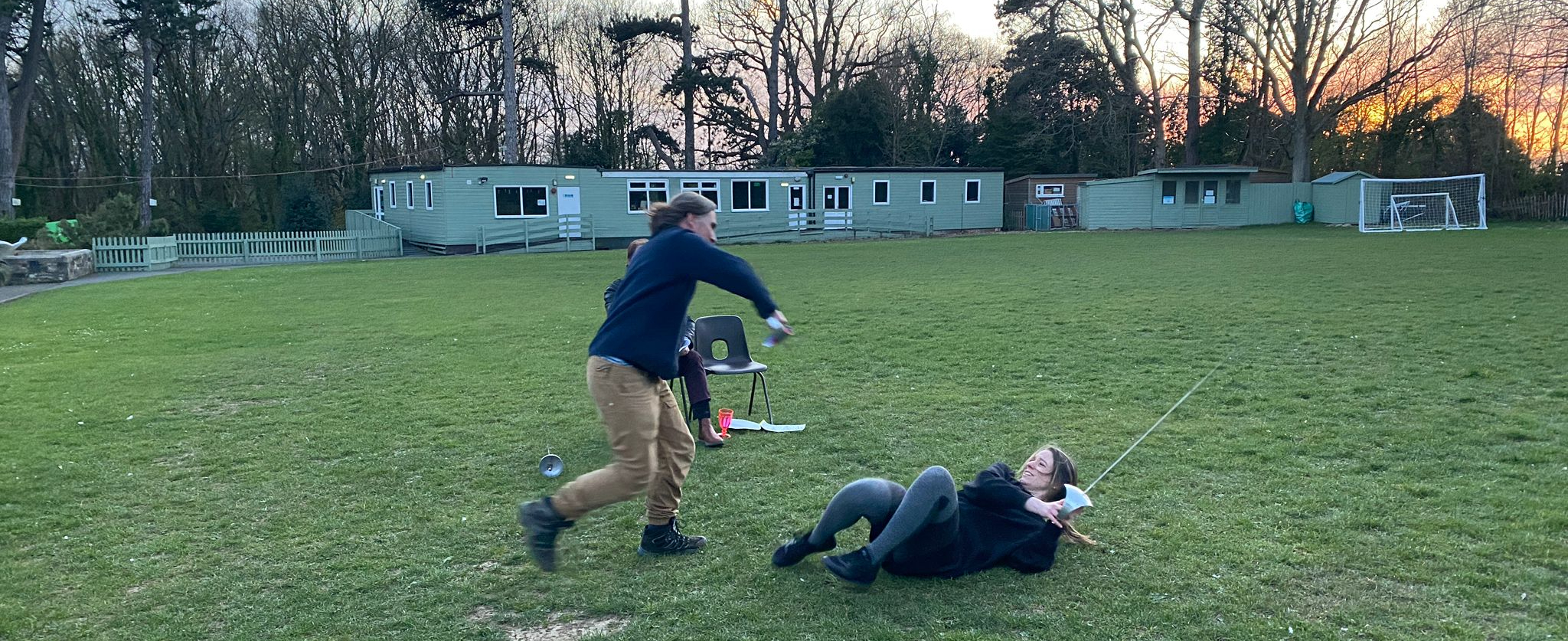
Rehearsal 6: This time, we met in a local park and ran the fight a number of times…and made a further tweak, quite by accident! We were running one of the bouts at mark speed (each move done at a steady pace, usually about half speed) and instinctively whilst disarming him I added a blow and he reacted to it. We stopped, grinned, and realised that actually what we’d just inadvertently added made the whole disarm more effective, and cleaner.
From now on, we will be running the fight on at least a weekly basis, twice weekly if we can, so that it is as polished as it can be, and so that it becomes as instinctive as every other element of the scene.
There are so many important elements to a fight like this one, which remains arguably one of the most iconic fictional duels in history. The plot is, obviously, critical – there are moments of action and dialogue outside of the fight itself, which are the lynchpins of that final scene.
The characters, too, are vitally important: there is absolutely zero point in putting a move in a fight that doesn’t fit the moment, the characters or the style you’re going for…all it will do is pull the audience out of the moment, and most likely the actors too. And for anyone who knows the final scene of ‘Hamlet’ and how physically and emotionally intense it is for the performers…yanking them out of character by forcing them to do something out-of-character is definitely best avoided!
But the most important element, for me personally, is trust.
There is a different level of trust required in your friends, to trust one of them to swing a chair at your head at exactly the right angle, and to trust the other to intercept the second swing before it can hit you in the back of the head while you’re still floored from Swing One.

I will say this many times over the coming months, I’m sure, but I am so deeply privileged to be working opposite two of my dearest friends in Patch and Ches (Horatio); that level of trust needed no work, because it was there already.
Trust between combatants takes a fight to a whole new level, especially when it’s mutual. It also increases the safety of the sight, by removing the element of fear: if something goes wrong, as can sometimes happen and sometimes through no fault of either fighter, if you trust the person you’re fighting against then you know they’ll notice. If you trip, they’ll slow their next blow. If they notice the sun is in your eyes, they’ll shift their position to rotate the fight. If they notice you’ve forgotten a parry, they’ll pull the blow.
It’s exciting, to be able to fight without those fears, because it means you have a lot more energy and headspace that you can dedicate to the character you’re portraying.
Don’t get me wrong, you still have to have your own wits about you, and they need to be sharp, for your own safety as well as for that of your castmates and the audience, but you can afford to allow yourself – or rather your character – a lot more freedom. This makes the whole fight – the whole story of the fight – more believable.
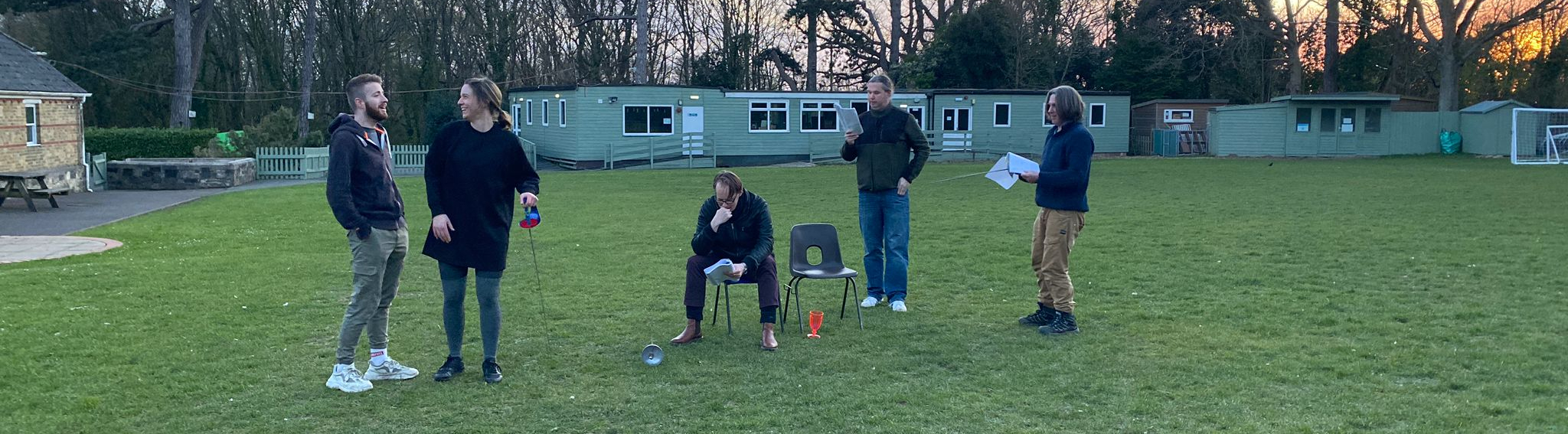
Using Hamlet and Laertes – specifically our Hamlet and Laertes – as an example, the story of the moves is equally as important as the moves themselves, if not more important.
At the start of our first bout, Laertes performs an elaborate, skilled fencing salute and falls into an en-guarde position. Hamlet follows suit, but his salute is laced with cockiness, and he turns to Horatio as if to say ‘can you believe this guy?’ as the bout begins. That’s nut-shelling it in a big way, but in the space of four to five moves you know exactly how both characters are approaching the fight.
Fast forward to a favourite move of mine in the third bout, when Hamlet and Laertes are in a bind (when the foils are locked together and neither can move without giving the other combatant the advantage), and we’ve added a line, three simple words: “Come on, Laertes.”
It’s Hamlet taunting Laertes, mocking him for the fact that he is supposed to be a master swordsman, and here’s Hamlet holding his own against him in a duel that, at least as far as Hamlet knows, has higher emotional stakes for Laerties than it does to Hamlet. To Hamlet, up until this moment, it has been a game. He doesn’t know that Laertes has a sharp and poisoned blade, and so far Laertes has been warring with himself over whether or not to try to strike the fatal blow so he has been holding back some of his speed and strength. This moment, in bout three, is when that changes.
In our fight, this is the moment Laertes makes his decision: he pushes against Hamlet’s blade, pommel to pommel, with such force that Hamlet is sent stumbling, and when he rises he finds Laertes’ blade pointed at his throat.
The balance of the fight has shifted, in one simple move.
It’s clear in the faces of Hamlet and Laertes, in their stances, in the utter silence that follows the move itself, and it’s thrilling for the fighters, the onlookers and the audience alike.
From that moment on, chaos reigns, and the characters are careening towards the end of the play at such a speed that the audience can’t
There are several ‘set pieces’ in this particular play, scenes and moments everyone knows and is waiting for, and the fight is undoubtedly one of them.
For us, putting it together has been a joy, and we can’t wait to see and hear the reaction of the audiences. We really, truly hope it excites them as much as it has excited us…

 I’m facing this question at the moment and, rather poetically, it’s all because of a musical about dreams…
 This time, I wrote just one line: ‘May I return to the beginning…’
 Joseph went above and beyond everything I had ever imagined, and I couldn’t put my finger on what it was that made it that way, because every time I thought about it, I’d find a way to convince myself the dream hadn’t ended: there was the after show party, the reviews, the feedback on social media, the DVD, the photographs…
 For the eight-year-old, who performed in Joseph at primary school and gazed up at the Narrator, wishing to be them and willing herself to be worth that role, it meant a childhood dream come true.
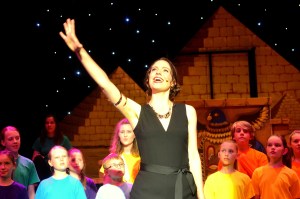 For the twenty-three-year-old, who auditioned time and again for musicals, who gave her all and was still overlooked every single time, who was left wondering if maybe she just wasn’t good enough, it was proof that she had the talent to hold a leading role…and the reviews proved she could nail it.
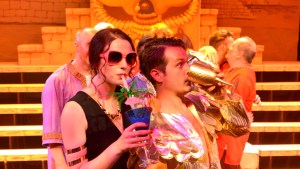 I said to myself, several times during the rehearsal process, that I didn’t know what I’d do when Joseph ended, because I was pretty sure it was the only thing holding me together. And those I told laughed it off, or dismissed it as typical thespian drama, or just glossed over it with a worry of their own.
 And when the curtain went up on opening night, and Joseph – played, incidentally, by one of my dearest friends – came over to me during his first rendition of ‘Any Dream Will Do’, we grasped each other’s arms for a few bars longer than directed, willing each other not to cry because we’d done it. It was really happening, and neither of us could quite believe it.
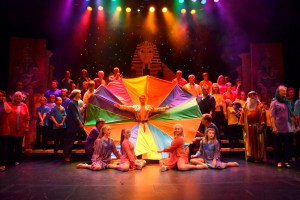 I need to find a new dream, I suppose…but no matter how I try to fix on something I want as much as I wanted that, I come up blank. What comes next, I don’t know. Perhaps it will hit me one day, with as much force as this one did, but – at this moment – I am very much of the opinion that, truly, any dream will do…
 Approach With Caffeine